A soggy lawn that squelches underfoot in May, puddles that linger for days after a storm, a basement that smells like a wet basement even when the floor looks dry, these are familiar scenes across London, Ontario. Our mix of clay and loam soils, spring thaws, and gully washers rolling through off Lake Huron all conspire to keep water where you do not want it. When surface grading and downspout adjustments are not enough, a properly designed French drain can be the quiet workhorse that puts water back where it belongs.
I have installed and rehabbed everything from short backyard drainage runs to full perimeter systems. The concept sounds simple, a perforated pipe in a gravel trench, but the difference between a French drain that runs for decades and one that clogs in a season is all in the details. This guide brings those details into focus for London homeowners, from design choices to by-law realities to winter performance.
What a French drain really does
At its core, a French drain gathers subsurface water and moves it away to a lower, safer discharge point. It does not make water disappear. It creates a preferred pathway, which is exactly what heavy clay soils in many London neighborhoods lack. Instead of perching above hardpan and creeping into low spots, water drops into a stone bed, enters a perforated pipe, and finds daylight, a storm connection where permitted, or a sump basin.
Yard French drains differ from foundation weeping tiles, although the materials often look similar. Weeping tiles in London, Ontario refer to the perforated drains installed at the footing around a foundation, usually tied to a sump pump or storm connection. A French drain out in the lawn intercepts water before it reaches the house or bogs down a side yard. The goals overlap, but the constraints and routing change.
Why London’s soils and climate are a perfect case for drains
The city sits on glacial tills that vary block by block. You can have a top layer of loam that grows great tomatoes with a dense clay layer 30 to 60 centimeters below. Water perches on that clay, especially after the frost comes out. Spring brings the toughest weeks. A snowpack turns to slush, the ground is saturated and still cold, and April rains show up right on cue. Annually, the London area sees roughly 900 to 1000 millimeters of precipitation when you count snow melt. That number matters less than the timing, with a few short cloudbursts often dumping 25 to 40 millimeters in an hour.
Backyard drainage in London, Ontario gets complicated by small lots and fences. Older subdivisions sometimes slope toward the house, or toward a shared fence where water has nowhere to go. Infill construction can change how water moves between properties. A French drain solves these site-specific headaches by catching water in the right place and setting a dependable path out.
Signs your property is a candidate
I like to watch a lawn through at least one significant rain to confirm how water behaves. Still, several symptoms recur in our region. Any one can justify a closer look.
- Puddles persist for more than 24 to 48 hours after rain, especially in the same depressions. Footing drains pump constantly for days, or your sump runs dry most of the year but cycles rapidly during shoulder seasons. Window wells hold water or the garden along one wall never dries out, even during a warm spell. A neighbor’s higher yard or a laneway sheds water onto your property, and the receiving area has compacted clay. Mushrooms, algae streaks on foundation block, or efflorescence lines show chronic moisture rather than a one-off storm.
One quick yard test helps. Take a post hole digger or auger and open a small test pit about 30 to 40 centimeters deep in the suspect area. Fill it with water and time the drawdown. If the water remains after several hours during a dry week, plan on a drain or major regrading. If it drops within 30 to 60 minutes, you may be able to tune grading and downspouts first.
Drainage is a system, not a single trench
Before you settle on french drains, review the upstream controls. Regrade where practical. Extend downspouts far enough away from the foundation, often 2 to 3 meters in clay, and point them to places water can safely soak in. Keep gutters clean, because an overflowing eavestrough dumps thousands of litres next to your footing during a big storm. Check that patio slabs are not tilted toward the house. A French drain will not fix a roof-to-basement shortcut. It provides insurance and a path for what you cannot redirect on the surface.
In London, downspout connections to the sanitary sewer are usually not allowed. The city has promoted downspout disconnections in many neighborhoods to keep stormwater out of sanitary lines. Accept that your French drain cannot lawfully tie into the sanitary sewer. Options include daylight discharge to a lower rear easement or side ditch, connection to a legal storm inlet where one exists, routing to a sump basin that discharges outdoors, or dispersing through a dry well sized to your site.
Where a French drain belongs on a London lot
I often place French drains in one of four locations.
Along a problem fence line that traps runoff. This trench runs parallel to the fence, catching water before it crosses the property and routing it to a front ditch, a storm lead, or a rear swale.
Between a high neighbor and a lower basement wall. Here, the drain sits a meter or more out from the foundation to avoid undermining the bearing soils. The trench collects water moving laterally across the lot.
Under a lawn basin that never dries. A short, deep French drain with an inlet grate on top allows water to drop quickly into the stone bed. This is a discreet fix when you cannot change the overall yard slope.
Along a driveway or patio that sheds toward the house. In tight urban lots, a narrow trench with a channel drain or a perforated pipe behind a retaining edge diverts flow away from the foundation.
For foundation perimeter issues, talk about weeping tiles in London, Ontario. If you have a wet basement and no exterior drainage, the correct fix is often an exterior weeping tile replacement with proper damp proofing, not a yard French drain. The two can complement each other, but they serve different risks.
Anatomy of a durable French drain
The good ones all share a few traits. The trench is sized for both the soil and the flow. In our clay, I like a trench 30 to 45 centimeters wide with a depth that puts the pipe at or just below the problem layer. Forget mystical depths, you want to sit in the wet horizon, not a meter down just to say you went deep. Most residential runs end up with the pipe invert 35 to 70 centimeters below the surface. In some rear yards that back onto greenspace, you can go deeper to reach daylight. Near foundations, avoid dropping below the bottom of the footing unless you coordinate with a structural engineer, because you do not undercut a bearing layer.
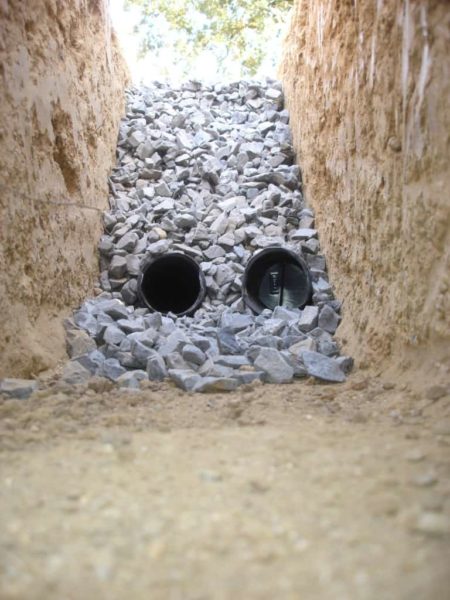
Inside the trench, use a non woven geotextile wrapping the entire stone envelope. This is not the place for landscape fabric that looks like a window screen. In London’s clay, the fines migrate with freeze thaw and will slowly clog a drain bed if the fabric is wrong or missing. A non woven filter fabric with the right permittivity passes water while keeping out silt. Your aggregate should be a clean, washed stone with no wet basement london ontario fines, commonly 19 millimeter clear stone. Some crews use 25 millimeter clear if they expect heavy inflow.
The pipe needs perforations and stiffness. I use perforated PVC SDR 35 or a heavy duty triple wall with a solid, round interior that will not deform under soil load. Flexible black corrugated pipe has its place for short, shallow connections, but it kinks and holds sediment in the corrugations. If you choose corrugated for budget or access reasons, make sure it has a sock, bed it well, and accept that service life may shorten. Lay the pipe with perforations down in most yard drains to create a water table within the stone bed. On long flat runs, a double perforation pattern can help balance inflow.
Slope makes or breaks performance. Aim for at least 1 percent fall if the site allows, which is 1 centimeter of drop per meter of run. I will accept down to a half percent on short runs with a reliable discharge, but anything flatter risks ponding in the pipe. A builder’s level, laser, or a smart level on a screed board beats guessing with a string.
Finish the trench with 10 to 15 centimeters of stone above the pipe and fold the fabric over the top like a burrito. Some clients want a green lawn again. You can cap the assembly with 10 to 15 centimeters of quality topsoil and sod. In wet problem areas, I prefer to leave a stone strip flush with grade and rake in an attractive pea gravel or river rock so water enters readily. Either works, provided the rest of the design is right.
Where to send the water
Daylighting to a lower point on your property is the least fussy and most reliable. I try to outlet into a swale or naturalized area that can absorb a pulse of water. Do not dump directly onto a neighbor’s lawn. That invites conflict and, in many cases, violates municipal rules.
Some London streets have storm laterals for lawful hookup. You need to verify availability and permitting with the city and often involve licensed drainage contractors in London, Ontario for that connection. Where there is no storm lead, a sump basin can collect the French drain flow and pump it to a safe surface discharge, fitted with a backflow check. If you rely on a pump, include a battery backup or generator plan. London loses power during summer storms more often than we like, and a powerless pump is just a heavy pipe.
Dry wells work in specific soils. In heavy clay they fill, then they sit. I only use them as an overflow buffer sized generously, often 1 to 2 cubic meters of clear stone with vertical venting and easy access for inspection.
Tricky sites and edge cases
Tiny side yards wedged between houses built a decade apart demand creativity. There may be just 1.2 to 1.5 meters between foundations. You cannot dig below your neighbor’s footing. In these cases, a shallow French drain combined with a narrow surface swale or a strip drain along pavers can perform better than one deeper trench.
Steep backyards that race water toward a walkout require check dams within the trench and surface contouring. The idea is to slow water enough to infiltrate the bed rather than shooting past your inlet grates.
Mature trees change the plan. Never trench within the critical root zone, usually the dripline and beyond. If the drain must pass nearby, route around main roots and consider air spade methods for minimal damage. Use a solid pipe in root zones to reduce intrusion. Expect to snake once every few years if roots are active.
Winter performance deserves its own note. A French drain below the frost line, which in London sits around 1.2 meters in a typical year, will flow in a January thaw. Most yard drains are shallower. The stone bed still helps by storing water below the frozen crust and releasing it as the thaw progresses. Protect outlets from icing shut. I insulate discharge ends with surrounding stone and keep them above grade where wind and sun reach.
A practical build sequence that avoids do overs
- Call Ontario One Call for locates and wait for clearance. Strike a layout line with paint and flags. Confirm the discharge point is legal and actually lower. Set grade stakes with a laser or level. Plan for 1 percent fall when possible, accept no less than a half percent on very short runs. Excavate the trench cleanly. Scarify the bottom, then set a compacted, flat bed. Line the trench with non woven geotextile leaving enough to fold over the top. Place 10 to 15 centimeters of 19 millimeter clear stone, lay the perforated pipe with perforations down, confirm slope continuously, then surround with stone to at least 10 centimeters above the crown. Fold fabric over, cap with topsoil and sod or decorative stone, set any surface inlets flush with grade, and protect the outlet from erosion with rip rap.
I keep a vac or shop pump on hand in clay sites. Even a short shower can fill a fresh trench, and you do not float a pipe into position with water pooling under it. If rain is imminent, stage the job to open and close sections the same day.
Costs in the London market
Homeowners always ask for numbers, and the right answer is that soil, access, and finish work drive the total more than the length alone. As a broad bracket for french drains in London, Ontario, expect roughly 45 to 80 dollars per linear foot for a typical residential yard run in accessible lawn, including excavation, geotextile, clear stone, perforated pipe, and basic restoration. Tight access that requires hand digging or mini equipment can push the figure higher. Add for catch basins, sump tie ins, or hardscape restoration.
Weeping tiles in London, Ontario, meaning a full exterior foundation perimeter replacement, are a different scale. Those projects often run into the tens of thousands because they involve excavating to the footing, waterproofing, insulation, and sometimes structural work.
Good drainage contractors in London, Ontario will price a range and explain what could move the number up or down. Ask where they will outlet, what fabric they use, how they set slope, and how they plan to protect landscaping. You are not buying a trench, you are buying a dry yard.
Common mistakes I still see
Fabric skipped or the wrong type installed. Landscape fabric belongs in flower beds, not in a French drain. It clogs and starves the trench.
Relying on flexible corrugated pipe everywhere. It is cheap for a reason. Use it sparingly for short, shallow bends only if needed.
No thought to discharge. A perfect trench that exits to a dead end becomes a bathtub. Daylight, storm lead, sump, or a properly sized dispersal area are non negotiable.
Setting pipe without checking slope every few meters. Clay soils can fool you. A trench that looks downhill might not be. Use a level.
Installing too close to or below footings. Water follows the easy path. Undermine a bearing layer and you could create a structural issue. Keep yard drains offset from the foundation and at a safe depth.
Working with contractors vs DIY
Plenty of handy homeowners tackle short runs, and some do a fine job. The deciding factors are access to the right tools and the patience to work in clay without making a mess. A proper job needs a level or laser, a plate compactor for bedding, good quality geotextile, and either a mini excavator or several strong backs. If the outlet involves a storm tie in or a sump, bring in licensed drainage contractors. They know the local code, can arrange permits where required, and have the insurance to stand behind the work.
When you interview drainage contractors in London, Ontario, ask for two or three recent addresses within a few kilometers. Drive by after a rain if possible. Look at their outlet details and restoration work, not just the trench. Strong contractors are candid about what a French drain can and cannot fix. If someone promises a forever cure with a single trench foundation underpinning london on and no attention to grading or downspouts, be wary.
Dealing with neighbors and property lines
Water that leaves your lot at high velocity can create a new problem next door. Keep drains a safe distance from property lines when possible. If a shared swale runs along the fence, work together and split the cost of a properly graded channel with an underdrain. Document where the outlet sits and how it discharges. Good fences make good neighbors, but clear drainage easements make better ones.
The city may have rear yard catch basins or easements in subdivisions built after the 1990s. If your lot abuts one, confirm ownership and maintenance responsibilities before you tie in. Some basins are municipal, others are private and shared.
Maintenance and lifespan
A well built French drain in our soils should run for decades with minimal attention. That said, do not bury and forget. Keep surface inlets free of debris. Every couple of years, check the outlet after a storm to confirm steady flow. If you have a sump in the system, clean the pit annually and test the pump. For stone topped drains, rake the top layer in spring to break up any crust.
If performance drops over time, start with a flush from the high end. A garden hose with a drain cleaning nozzle can clear fines from a short run. For longer systems or those with corrugated sections, a drain contractor with a jetter and camera can assess condition. Root intrusion is less common in stone wrapped, perforated PVC systems, but not impossible. Where trees are aggressive, I sometimes place a solid pipe for several meters across the root zone to discourage entry.
When a French drain is not the answer
Some sites want a different approach. If your backyard sits a meter higher than the street and the soil percolates well under the top layer, a broad, shallow swale with regrading might solve the problem with no pipe at all. In new builds with bare soils, the first fix is often compaction relief and adding organic matter to improve infiltration.
Where water arrives as sheet flow off a large hardscape, a linear channel drain tied to a storm lead or sump can intercept it more neatly than a buried perforated pipe. For patios and walks, permeable pavers with an open graded base create their own French drain beneath your feet and handle storms impressively when installed correctly.
If your basement leaks at the cove joint where wall meets slab, the issue is at the foundation. Weeping tiles and exterior waterproofing address that problem directly. A yard French drain near the wall will not relieve hydrostatic pressure under the slab.
Rain gardens round out the toolkit. In side yards that are hard to regrade, a shallow basin with deep rooted natives can accept downspout water and small overland flows. In London’s clay, underdrain the rain garden with a perforated pipe to a safe outlet and fill the base with clear stone under the planting soil. You get infiltration during normal storms and capacity during big ones.
Putting it all together on a real London lot
A family in White Oaks called after two seasons of trampoline mud and mushrooms in May. The yard sat lower than both neighbors, with a swale that broke halfway and spilled toward the back door. The sump barely ran except during spring, when it chattered for two weeks. We regraded a subtle surface channel along the fence, then set a 45 centimeter wide French drain through the low spot, running 18 meters to a rear easement where we could daylight into a vegetated area. We chose perforated PVC, wrapped in non woven geotextile, 19 millimeter clear stone, and a decorative river rock finish over the trench. Slope measured a steady 1 percent. The outlet got a small rip rap pad to tame erosion.
After the first thunderstorm, water lingered in the river rock for an hour, then disappeared. The sump stayed quiet. The family could mow the lawn two days after a storm without leaving ruts. That is a typical win. Nothing flashy, just physics working in your favor.
Getting from idea to dry ground
If you are weighing french drains in London, Ontario, start with a clear problem statement. Where does water come from, where does it collect, and where can it go without causing trouble. Sketch possible routes and test grade with a long level or a stretch of clear tubing as a water level. Decide whether the job calls for DIY or a pro. Budget a realistic range that includes restoration, not just the trench.
Revisit upstream fixes one more time. Extend downspouts, clean gutters, and set positive surface pitches. Then commit to the details that keep a French drain from becoming an expensive garden feature that does nothing, correct fabric, clean stone, rigid perforated pipe where it matters, verified slope, and a lawful discharge.
Backyard drainage in London, Ontario rarely hinges on one miracle product. It is the sum of small, disciplined choices made in the right order. When those choices align, the puddles stop making decisions for you, and the only water in your backyard is the kind you planned.
Ashworth Drainage — Business Info (NAP)
Name: Ashworth DrainageAddress: 514 Hale St, London, ON N5W 1G8
Phone: (519) 660-9375
Website: https://www.ashworthdrainage.ca/
Email: [email protected]
Hours:
Monday: 9:00 AM – 5:00 PM
Tuesday: 9:00 AM – 5:00 PM
Wednesday: 9:00 AM – 5:00 PM
Thursday: 9:00 AM – 5:00 PM
Friday: 9:00 AM – 5:00 PM
Saturday: Closed
Sunday: Closed
Open-location code (Plus Code): XRR3+HV London, Ontario
Map/listing URL: https://maps.app.goo.gl/9kaoXAxRtJRP1ThS9
Embed iframe:
Socials (canonical https URLs):
Facebook: https://www.facebook.com/ashworthdrainage/
X: https://twitter.com/ashworthrules
Instagram: https://www.instagram.com/ashworthdrainage/
https://www.ashworthdrainage.ca/
Ashworth Drainage provides basement waterproofing and foundation repair services in London, Ontario and surrounding areas in Southwestern Ontario.
The company helps homeowners address wet basements, water intrusion, and drainage issues with solutions that fit the property’s conditions.
Service requests can include foundation repair, waterproofing options, sump pump and drainage-related work, and related assessments.
Ashworth Drainage is based at 514 Hale St, London, ON N5W 1G8.
To reach the team, call (519) 660-9375 or email [email protected].
Business hours are Monday to Friday 9:00 AM–5:00 PM, with the office closed Saturday and Sunday.
For directions and listing details, use the map listing: https://maps.app.goo.gl/9kaoXAxRtJRP1ThS9.
Popular Questions About Ashworth Drainage
What does basement waterproofing help prevent?Basement waterproofing is intended to reduce water intrusion and moisture problems that can lead to dampness, leaks, odors, and damage over time.
How do I know if I may need foundation repair?
Common signs can include visible cracks, water seepage, shifting or uneven areas, or recurring moisture problems; an on-site assessment is usually the best way to confirm causes and options.
What areas does Ashworth Drainage serve?
Ashworth Drainage serves London, Ontario and surrounding areas in Southwestern Ontario.
What are Ashworth Drainage’s hours?
Monday–Friday 9:00 AM–5:00 PM; Saturday closed; Sunday closed.
How can I contact Ashworth Drainage?
Phone: +1-519-660-9375
Email: [email protected]
Website: https://www.ashworthdrainage.ca/
Map: https://maps.app.goo.gl/9kaoXAxRtJRP1ThS9
Facebook: https://www.facebook.com/ashworthdrainage/
X: https://twitter.com/ashworthrules
Instagram: https://www.instagram.com/ashworthdrainage/
Landmarks Near London, ON
1) Kiwanis Park2) Western Fair District
3) Covent Garden Market
4) Victoria Park
5) Budweiser Gardens
6) Museum London
7) Fanshawe Conservation Area